
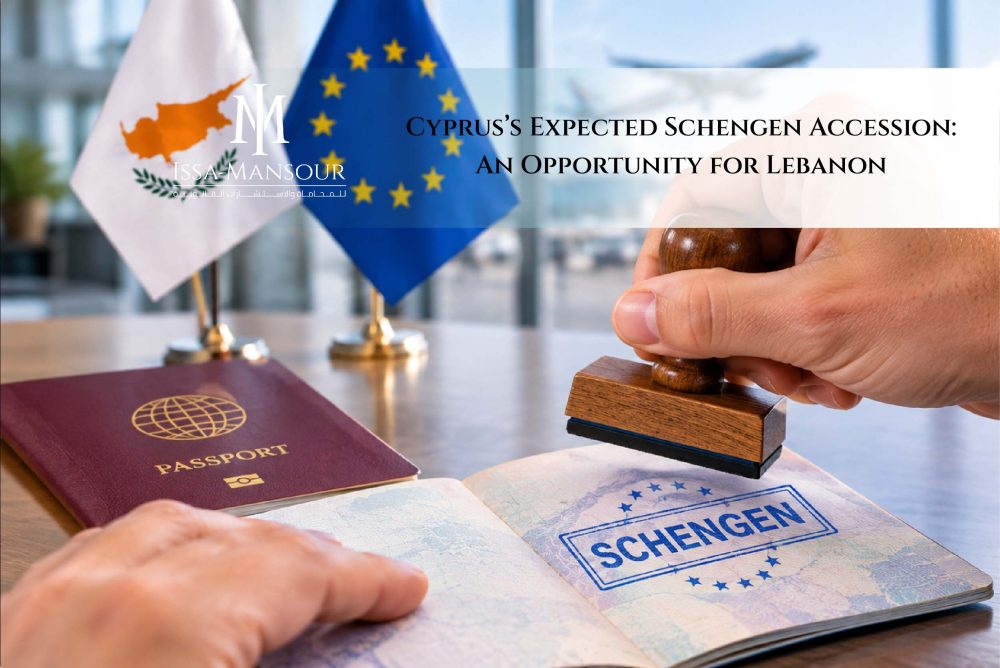
The prospect of Cyprus joining the Schengen Area on 1 July 2027 could mark an important development for the Eastern Mediterranean, with implications that extend beyond the island itself. The date was highlighted by Greek Prime Minister Kyriakos Mitsotakis, who expressed his expectation that Cyprus would join at the start of Greece’s presidency of the Council of the European Union. However, accession remains subject to the required European procedures and approval.
For Cyprus, joining Schengen would represent another step in its integration with Europe. For Lebanon, its neighbouring EU member state becoming part of the Schengen Area could create new opportunities to strengthen economic, commercial and social ties with Europe.
The potential benefits for Lebanese citizens and businesses are worth considering. Cyprus could become an even more attractive destination for tourism, education, professional opportunities and business activities. It could also offer Lebanese entrepreneurs and investors a more direct connection to European markets and networks.
An important practical change would concern travel. Once Cyprus joins the Schengen Area, eligible Lebanese travellers holding a valid uniform Schengen visa issued by Cyprus would generally be able to travel to other Schengen countries, subject to the visa’s validity and conditions. This would not, however, mean visa-free access for Lebanese citizens. Visa requirements would continue to apply.
Beyond travel, closer ties between Beirut and Nicosia could support cooperation in several areas, including investment, tourism, education, maritime affairs and business development. At a time when Lebanon is seeking economic recovery and stronger international engagement, these are opportunities that deserve serious attention.
For Lebanon, the development should be viewed as more than a change in Europe’s travel arrangements. It presents an opportunity to strengthen diplomatic relations with Cyprus, encourage legitimate business and tourism exchanges, promote joint investment initiatives and build stronger institutional and commercial links.
Ultimately, Cyprus’s anticipated accession to the Schengen Area could bring Lebanon closer to Europe in practical terms. Whether this translates into meaningful benefits will depend not only on Cyprus’s membership, but also on Lebanon’s ability to develop the partnerships, policies and initiatives needed to make the most of this opportunity.