
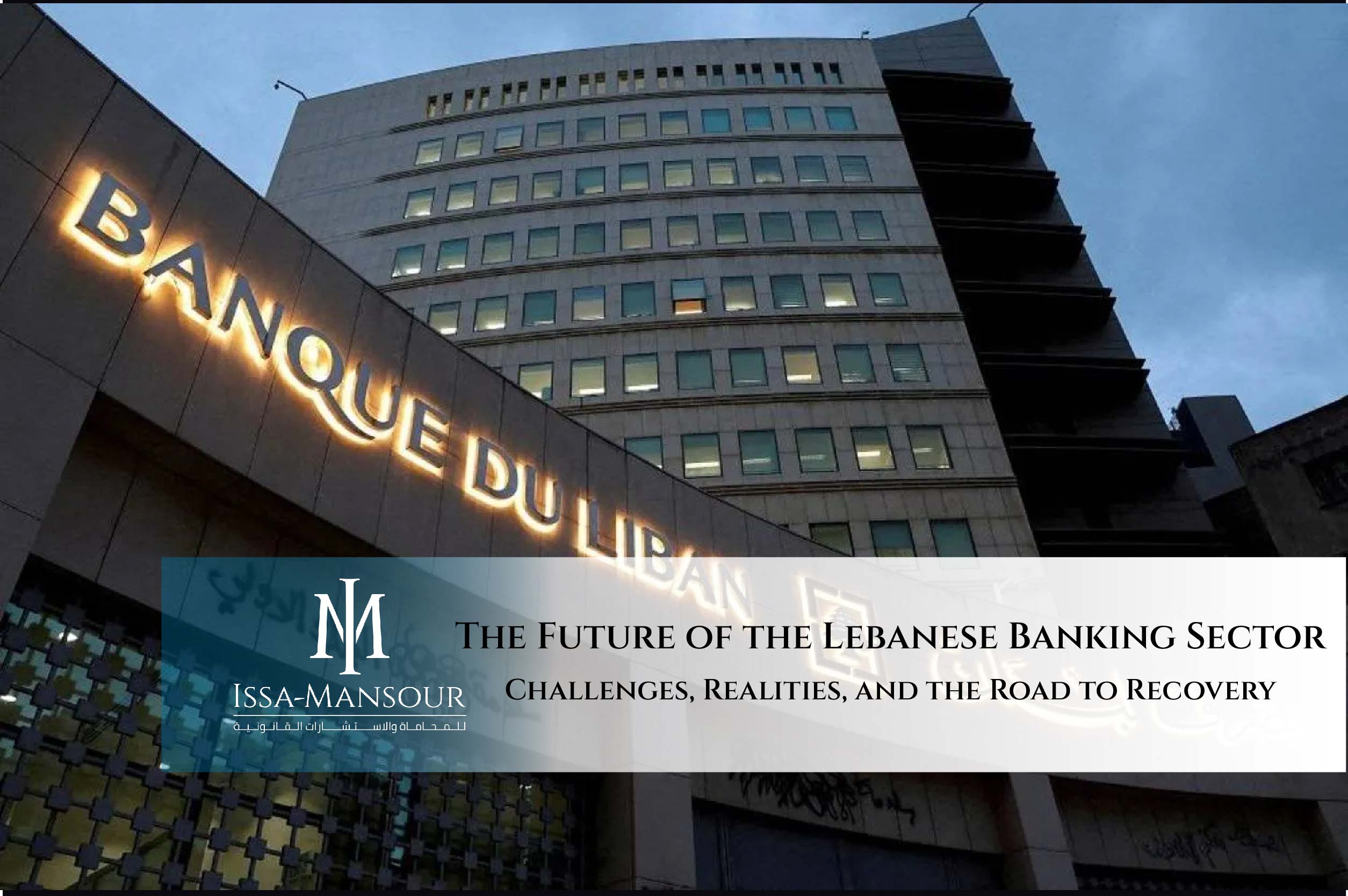
Challenges, Realities, and the Road to Recovery
For decades, Lebanon’s banking sector was considered one of the country’s strongest assets. Since the 1960s, its banking secrecy laws and reputation for stability attracted both local and international capital, turning Lebanon into a preferred destination for financial activity and investment.
That image has changed dramatically.
The financial and economic collapse of recent years inflicted severe damage on the sector, triggering a wave of consequences: capital flight, economic paralysis, stalled investments, legal battles between banks and depositors, and unprecedented restrictions on foreign-currency withdrawals. These measures not only disrupted daily economic life but also eroded trust at home and abroad.
The circulars issued by the Central Bank failed to stop the downward spiral or reassure the public. Many citizens, business owners, and industrialists have opted to keep their savings outside the banking system, fearing further losses. Others continue to withdraw their foreign-currency deposits at a fraction of their value, accepting an 80% loss simply to reclaim tangible access to their own funds. This atmosphere pushed the political leadership to appoint a new Central Bank governor and pursue legal action against the former one, a move widely seen as politically motivated.
What deepened the crisis is the political class’s deliberate delay in passing the legislation necessary to contain the damage at the onset. While countries such as Cyprus and Greece faced similar crises, they acted swiftly through clear legal frameworks, allowing their banking sectors to recover in a relatively short period. Lebanon, by contrast, allowed the crisis to worsen.
In any country, a healthy banking sector is indispensable. It fuels the economic cycle, supports domestic and international trade, provides liquidity and credit, and anchors financial stability. Lebanon’s banks are currently unable to perform these basic functions due to the absence of liquidity, deposits, credit activity, and above all, public confidence.
Recently, the Central Bank introduced amendments increasing withdrawal limits in foreign currencies, and some banks have begun offering new services and reopening certain facilities. Many accounts have been reclassified as “fresh,” and limited personal loans have resumed. While these steps are positive, they remain insufficient without a broader recovery plan.
Rebuilding the banking sector is essential for reviving commerce, industry, and purchasing power, stimulating economic activity, and supporting import and export operations. But none of this is possible without restoring trust. Citizens need to feel that their money is protected through modern, transparent legislation, and that a realistic program exists to gradually return deposits.
Importantly, Lebanon does not need external aid to take these steps. What it does need is political will, transparency, and a clear framework for resolving the crisis.
In the end, the equation is simple:
The revival of Lebanon’s banking sector depends on the ability to restore public confidence. A credible plan that assures citizens of the return of their deposits, even over a set timeline, is the foundation for rebuilding this essential pillar of the economy. Without that trust, no policy or incentive will be sufficient. The Lebanese citizen remains the cornerstone of any meaningful recovery.